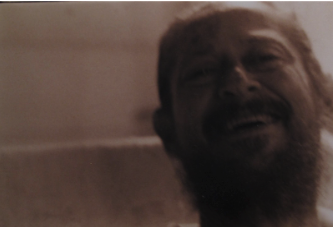
My Friend Who Robbed a Bank
By
Jim Savio
I was in Maine rescuing my daughter’s car. I managed to get it running and drove it to a local garage. We had just settled into a Motel 6 when my wife called.
“Are you sitting down?”
The tone of her cliché implied surprising news, not a tragedy. I’m not sure why, but I took a seat.
“Mike robbed a bank,” she said.
“What?”
She repeated it word for word as I tried to place the Mike in my life she was talking about. But of course, she was talking about Michael. She was one of a few people who called him, Mike, and never stood corrected. Then she filled me in.
“Last Thursday he went into the Key West Federal Credit Union to make a car payment,” she said. “Instead of giving them the money, he asked for some.”
“How much?”
“They’re not saying. He slipped the teller a note and got away with an undisclosed amount of cash. Over a twenty-four hour period he called a dozen taxis and tipped the drivers fifty to a hundred dollars on five and ten dollar fares.”
“That’s Michael.”
One report said he was seen starting a fire at one of the outdoor grills at Monroe Beach.”
“Burning the money? Not Michael.”
“A tourist said she saw a man at the post office who might have been Mike. He
was whistling and talking to an imaginary dog.”
“Crapper.”
She nodded over the line. “A third source, who would not give her name, was
certain she had seen a man who fit Michael’s description climbing trees around the cemetery making jungle bird noises.”
I laughed.
“They’re all potentially him,” she said. “You know that. But no money aside from the taxi tips can be traced back to the robbery.”
“Did they arrest him?”
“He surrendered to the local police on Saturday,” my wife said with a hint of defeat. “He was waiting in line at the Quick Mart on White Street when two cops walked in to order sandwiches. Michael went up and told them: ‘Hey, I robbed a bank and man, I feel really bad about it.’”
“That does not sound like, Michael” I said, remembering several occasions when he had openly confessed a lifelong dream of robbing a bank.
The perfect crime, he had argued, and no one gets hurt except the banks and the insurance companies who have more than enough cash to go around.
It was ironic and sad to learn that Michael remembered little, if anything, of what happened that day. The good news he had called about earlier that month with regard to his treatment, paled in the light of what my wife just told me. Something had gone terribly wrong in the past two weeks, though I was not surprised. There’s no getting away from our past, ever, and Michael’s was relentless.
Six months before, with a cirrhotic liver functioning at ten percent of its capacity, weakened further by Acute Hepatitis C, Michael applied for a transplant against any good odds of getting one. Admitting he’d been a drinker and cocaine user didn’t help his chances, but he’d been clean for six months and was determined to stay that way. A gambler, he was well aware of his chances and believed he had nothing to lose and everything to gain. I wanted to believe that too.
Before you even qualify to stand on the liver line, there’s months of testing, screenings and evaluations because livers are in short supply and the demand is competitive. When one comes on the market and your number is called, all bids are in and you have to move fast. A liver has a short life span between bodies. Finally, Michael was approved and issued a beeper. A local stunt pilot he was friendly with agreed to fly him to Miami in an open cockpit biplane when the whistle blew. Everything was in place; it was a waiting game and Michael was good at waiting. What he occupied his time with, though, often came with a risk. It was another thing he excelled at – danger. This was just a month before the bank teller, who knew him by name from years of long and short-term loan payments, smiled when he handed her the note. She grew serious, I imagine, when he apologized and told her to please take the note to heart and didn’t wink at her as he normally did, and hid something bulky under a neckerchief in his hand. Michael knew plenty of people in Key West, and most people knew of him.
There were things about Michael I could not help but like, and those same qualities made it impossible for many people to cozy up to him. You either loved or did not like him at all. Either way, you couldn’t know Michael and not have a memory of at least once when he really pissed you off or made you laugh so hard you nearly pissed your pants. In his late fifties, he was well-read, sophisticated, street savvy, but a child disinclined to grow up – a case study for Jung’s archetype, puer eternis, forever young, a Peter Pan who was loathed to accept adult responsibility. It was not uncommon, when I’d visit him at his small house on Canfield Lane, to have the neighbor’s kids come by and call from the gate. “Hey Michael, can you come out and play?”
He had little faith in society’s formulaic demands or in the daily routines that governed mature behavior. This set him apart. He had started and run successful businesses in California and worked as a shepherd, living alone in the summer pastures of Idaho’s high peaks. He hunted crocodiles in Darwin, Australia, again by himself, and he was shipwrecked as he sailed single-handed from New Zealand to New Caledonia. Spending twenty-four hours floating in a half inflated inner tube he washed ashore on an island previously settled by marooned sailors a hundred and fifty years before. He was fond of quoting Marlow, from Heart of Darkness: “We live as we dream, alone.” It was never Michael’s intention to take anyone down with him.
Our friendship was a riddle of opposites attracting each other during the perilous, exciting and chemically invigorated South Florida 70s; lives we seemed to be acting in until things became decidedly real. I was on a run of some appalling decisions and Michael was in the same race. When it came time to stand back and take stock of our indiscretions we came apart, went our separate ways, yet remained friends and stayed in touch. One constructive thing that came out of all that madness was that each of us began to write.
Michael was a devoted reader of the crime page in the Key West Citizen and had gone back and collected the most bizarre articles he could find since the paper’s inception. He had this idea of editing them under one cover – All the Crime That’s Fit to Laugh-At. Was he aware that he would become one of those stories? I asked myself that question when I read his obituary and began to suspect that Michael may have planned the whole thing as the ending of a life he knew a liver couldn’t save. But you can’t discount the brain fog, or PSE, Portal Systemic Encephalophathy. Acute liver dysfunction causes toxins like ammonia to remain in the blood, spinal fluid and the brain, producing severe mood swings and affecting a patient’s equilibrium, ability to concentrate, and judgment. Either way, he had reached that point of no return, for there is that moment, I believe, when redemption as we know it, has no distinct meaning anymore. As Paul Simon put it: You’re simply tumbling into Graceland. . . .
The one time I spoke with him in jail I told him he finally got what every writer dreams of, but will rarely go to such extremes to get: three squares a day, a medical plan and not having to work for a living. He said he had an idea for a novel set within the sub-culture of prison infirmaries and could I send him some lined paper, a dictionary, and a pair of wool socks – his feet were cold.
I had taken some photos of Michael back in October of that year and when I sent them to him, before any of this happened, he threw them in the garbage telling his girlfriend, Linus: “Don’t think these are going to be the last pictures anyone takes of me, ok.” Was he foreshadowing or was he orchestrating his own mug shots? After having his charges dropped by the State of Florida and picked up by the Federal Government, a sympathetic prosecutor recommended that he be released on his own recognizance. A few days later he began to bleed internally. With Linus by his side, my friend who robbed a bank died in a Miami hospital and someone else moved ahead on the transplant line.
Michael has appeared in many of my stories, in a variety of disguises and in numerous locales. His was the sort of life you can’t sum up in one book – an anti-hero who allowed me to paint in the grey tones of human complexity we have little tolerance for outside the pages of fiction. Michael would not let go of that mischievous boyishness, that confusing, carefree, passion-driven-time of adolescence that we are reluctant to give up. In time though, most of us do.
Re-Imagining

by
Jim Savio
I’ve been teaching for the past twenty years and before that I ran my own construction company for twenty-five. I’m sixty-eight and contrary to what I practice in yoga and meditation: surrendering, I resist the idea of retirement. In particular, I take issue with the word, “retiring.” It explains little about this next chapter in my life. It looks into the future with the wrong end of the telescope. It’s a shriveling kind of word. I’m not stepping down, nor am I moving into a more flaccid phase of my existence. Yes, my skin is sagging where it used to be taut, my toenails are harder to reach for a clipping, and what was once “hardwood,” leans towards conifer in these late autumn days of my life. These little ditties of mortality are the anthems of a life forever defined by change and should be sung proudly. I don’t intend to slow-down as much as I hope to slow-up and observe more carefully. To be in the moment, not the next. Seeing the same-old-same-old in a whole new light. I’m opening my arms and heart to surprise. Imagine the aurora borealis giving a unexpected performance on Miami Beach. That’s what I’m talking about. So when people say: “Jim, I hear you’re re-tiring.” I say no, “I’m re-imagining.”
I’m re-imagining my daily routine when I don’t need to show up a half hour before class to write on the board. I’m picturing life al fresco, a time when I no longer have to report for duty, short of necessary chores like mowing the lawn, making repairs around the house, walking the dog or fertilizing some promising sativa. In other words, nothing too-too schedule driven. I’m making room for a hyperbolic experience in what previously had to fit in a box of more rigid, institutional geometry: being free to write a song, take a walk in the woods or visit a friend because there were no building inspectors to meet, course blurbs to write or estimates and performance reports due the following day. I look forward to taking off the uniform of my previous trades and playing dress up, glad to not have to shop at H&M for the smart- casual look of a university professor, or to zip up those insulated, Carhartt jumpsuits and build things for other people outside in the winter. I hope to build things of an altogether different molecular structure: a spiritual practice, a stronger bond with my wife and daughter and with my community, tighter friendships with the friends I have and to be open to friends I’ve yet to meet. To cultivate a garden, inside and out. To move toward a more forgiving, me.
But truthfully, I’ve always re-imagined those things I had to do, otherwise they’d have run the risk of redundancy or worse, boredom. My imagination kept me sane through the dull pedestrian tasks of life and career, and the unavoidable, tedious nature of living in the modern world. I’m not so naïve to think there will be no mind-numbing, onerous tasks ahead in the land of post-career. But why succumb to the expectation they will be tedious? If anything it’s time to reinvest in that faculty and take to heart what Carl Jung said about the debt we owe to the playfulness of the imagination; it’s priceless.
On the question of work, I don’t buy into the schema that when we reach a certain age we’ve earned the right to cease doing what is so essential to being human. The idea of work often gets caught up in the tangles and demands of career. Like that great, dismal swamp of American consciousness, the Puritan Work Ethic, our work becomes something we have to slog through. But work and what we have come to often associate it with – our profession – needs room to breathe. Work is not a senior inalienable right I want to fight for not doing. Work is using my mind and body to make things. When we re-imagine life after career, we’re free to create in whatever shapes and forms we choose, in whatever time is parceled out for us. At my age, there is far less time than there used to be. This is a moment to dream big or small, without the monkey of ambition on our back; to do it for the joy of it, or for whatever reasons our imagination comes up with. Work in a way – thank you Joni Mitchell – that feels “unfettered and alive.” Now if that’s camping out in your living room slumped in a Lazy Boy, doing cross word puzzles and watching re-runs of “The Dukes of Hazard” as you work your way through a bag of Cheese Doodles, I imagine that’s ok too. Chances are, you may have dreamed of that little scenario while pounding out a nine-to-five. Who am I to judge the powers and limits of your imagination.
Crow Call


When Fact Meets Fiction in the West Bank

The e-mail advised:
“Jim, consider another border crossing. Allenby has been a 7hr. hell.” Rebecca
I was flying out the next morning for Jordan, and via taxi, bus, and van I’d make my way to the Israeli border, into the West Bank and then Jerusalem. The following day I was scheduled to teach a fiction-writing workshop at the Bard Program at Al Quds University. I took her suggestion seriously; she had been living in the region for a number of years and was not inclined to exaggeration. But another border meant driving north for two-plus-hours, and then south again to Jerusalem. At any border my passport would be scrutinized. Plastered with stamps and visas from Arab countries Israel was not especially cozy with, my odds were excellent for a security check. So I opted for Allenby, much closer, but the only crossing open to Palestinians coming and going from the West Bank. It was always crowded, hyper-vigilant, and depressing.
I was lucky though.
Three and a half hours later I was in a van on my way to Nablus Road, impressed once again at the resilience of the Palestinian people, and astounded at how they lived day to day without going absolutely ballistic. But the next morning, as if brain fog had rolled in overnight, I embarrassed myself when discussing the importance of plot, and the difference between internal and external conflict. Ola, a student in the workshop, gave an example of a ‘woman and her occupation,’ and I naively assumed she was talking about the conflict of gender and the work place. How quickly I’d forgotten the complexity of words like occupation, collaborator, wall, citizenship, security, curfew, settlement, water, camp. . . all of them having distinct, serious connotations for Palestinians.
Al Quds Bard is a Liberal Arts Honors program in English, established in partnership with Al Quds University. Al Quds, Arabic for Jerusalem, is a commuter school with over ten thousand students. Bard enrolls about two hundred and eighty, the majority of which are Palestinians from Jerusalem, Ramallah, and other West Bank towns and refugee camps. Some are Palestinian Americans who have returned to maintain their “legal” resident status.
Located in Abu Dis, the campus hangs alongside the barrier wall separating Jerusalem from the West Bank, in Area B. It’s a kind of no-man’s-land, controlled civilly by the Palestinian Authority and policed by the Israeli Defense Force. Many students in the program have never been to Jerusalem because they do not have a Jerusalem ID card; the city-line is only fifty-meters from the front gate.
One of the professors offered his poetry class as a laboratory space for our work that day. There were ten students, and though a little shy at first, they were soon sharing their: “What ifs. . .” a viable way to jump-start a story. Many of theirs’ were drawn from life under the occupation. I reminded them that in fiction they were not bound by the facts of life, but completely free to imagine them in any way they wanted. Their story ideas were provocative, complicated, and by no means cliché: the raw material of good storytelling.
We looked at the literary devices a writer uses to build a story, and they were surprised to learn that fiction – unlike the academic essay – has TWELVE points of view to choose from. They experimented with dialogue, looked at the five ways of using comparison to emphasize an idea, and how to bring tension into their prose. We took a break and enjoyed a falafel sandwich. We prodded each other with questions, then got back to work.
Agreeing that characters were at the heart of any good story, we free-wrote ways to bring them alive on the page, realizing again how important dialogue and point-of-view were in doing so. We had nearly three hours together, but time zips-on-by when you’re making things. We parted with the promise we would all complete one short work of fiction before the semester was out. I had little doubt that the stories coming out of our exchange would be tales drawn from the heart. Maybe not free of the occupation, but free to imagine a time without it.
I Stopped Seeing My Therapist & Started Seeing My Dog

It was a Tuesday, 6:15 in the morning, my day to leave early and appear before my students as the one who knows – a teacher, a mentor, a symbol of decorum and a catalyst for illumination.
I couldn’t find my keys.
Close to the point of slamming drawers and doors or anything that with a push or shove would make a noise, instead I yanked the blankets off the bed – a quieter outlet for my frustration – and shook the sheets violently and then shook them again. I looked under the bed, behind chairs, on top of the bookshelves. I searched the usual suspects, twice: the change bowl for the washing machines in the basement, desk cubbies, back pack, and the small box with dozens of other keys whose locks were a mystery to me – keys that stared back, mocking the four keys on a simple key ring that I couldn’t find. I rifled through pockets – pants, shirts, jackets, coats, sweaters, gym shorts, and pajamas, even the old tuxedo that I hadn’t worn in ten years on the not-so-off chance I had actually done something so unconscious. Nothing was beyond suspicion when it came to finding the things I’d misplaced.
My wife was helping me look which only amplified the stupidity of having misplaced my keys for the umpteenth time that week. She was quiet as she went about what had become a near daily routine for her, like brushing someone else’s teeth, clipping their toe nails or wiping their . . . Her vow of silence only made me crazier. I had stretched the, I’m only human, excuse to the limits of what a human failing was. My self diagnosed, chronic, mid-life crisis syndrome wasn’t holding up to the rigor of how often I misplaced things. I was an early user and abuser of that modern excuse for mindless behavior and by the time I was searching for my keys that morning, I was well over the halfway mark. If there was sympathy in my wife’s eyes, she was a master of disguises.
I was five whole minutes into the search when the banging started, followed by the mumbling, then swearing, till I was talking to myself like a circus barker, or one of Marquis de Sade’s buddies at Charenton. Making more noise than a garbage truck, I could give a rat’s tookus about what my neighbors thought as they waited for the elevator outside my apartment and I thrashed about like a well-tanked skinhead in a mosh pit.
Most recently, I argued that my skill at losing things and then flipping-out over that worthless expertise could be the result of a suspected parathyroid condition or an accumulation of gluten in my blood. I had lost not only my keys, but any sense of logic, self respect, and restraint. I was clenching my fists, walking stiffly from room to room – a cartoon character with steam hissing from my ears. Just before I literally blew my stack, broke a blood vessel in my brain or screamed like I was riding in the front car of the Cyclone, I saw him sitting there by the radiator staring at me. He was shaking.
I knew Pete was there. He was always there in the apartment when my wife and I were home together. But this time, I really saw him. He was stretched out on the floor in a Sphinx pose, his ears back and fluttering timidly. His forelegs pawed nervously at the old parquet floor and those huge, wide-set, Boston Terrier eyes looked confused and concerned and more sad (if that’s possible) than I had ever seen them look before. Kneeling down in front of him, he cowered a little. I saw myself reflected in his worry and felt awful for having threatened the sanctity of his security.
I apologized for having frightened him and continued to voice my regret. I picked him up and sat down on the edge of the bed, cradling the little bugger in my lap. I felt his tiny heart race and I talked to him the way you talk to little creatures, but my baby talk only reminded me of my own behavior. Gradually he opened his rear legs and I scratched him where he loved to be scratched, on his inner thighs, and he fell asleep in my arms, the way my daughter, thirty-three years before had drifted off to sleep when I sang to her. He had calmed down. I had calmed down. And then, the irony that runs concurrent with our being human reached out and whacked me up the side ‘a the head, and I was instantly aware that the dog I never wanted, the dog that would chain me to his feeding habits and shackle me to his bowel movements and pooper scoopers for the rest of his life, the dog that would run up vet bills that rivaled the cost of my appendectomy and dampen my dreams of summers spent writing in foreign countries, had taught me something immeasurable about myself. As hideous as it was to look at it and as demoralized as I felt by my behavior, it was profound.
Looking into those eyes that were too big for a head that was too big for his body, I felt good about my recent decision to stop seeing my therapist. Grateful she had gotten me to this point on the path; it was time to strike camp. And why not, I was living with the Buddha, the Prophet, the Savior, disguised not as ferryman, a shepherd or a carpenter, but a funny looking dog. I had a straight-on glimpse of enlightenment. There was hope and I was fully prepared to follow him.
There on my unmade bed, in the early hours of a New York winter morning I said out loud: “Hi, my name is Jim and I’m an adult who throws temper tantrums. I haven’t seen a glass half full since the, “Summer of Love” and for the past thirty-five years I have freely offered advice to my wife when she hasn’t asked for it. I sabotage my best intentions with my favorite mantra, mañana. I’m a blamer and I misplace things with the regularity one hopes for with a high fiber diet: glasses, ATM cards, cell phone, watch, and as you know by now, keys. I still believe at fifty six that I could be a major league ball player, a rock’n roll star and a writer with a book on the New York Times’ best seller list. And if that’s not enough, I chew my food with an annoying attention to enzyme secretion that makes a sound like rubbing two pieces of sand paper together. . .” Pete had allowed me to see myself reflected in his Peter Lori eyes, and to unload.
Then I remembered where I had put my keys. Note: further information regarding that small detail will be not be revealed at this time to avoid the complete annihilation of my ego. I looked at Pete again. He looked back at me. There was not a shard of judgment, the hint of a grudge or a trace of malice, and I smiled to avoid crying and then cried anyway. Somewhere in the vicinity of every smile there’s a tear, perhaps for the regret of not having smiled enough. At that moment I realized that Pete was a constant source of amusement in my life. How blessed am I, I thought, to be the custodian of a four-legged clown, who’s circus arts could solicit a laugh from a guy like me, a man my wife refers to as a Cormac McCarthy character.
“Thanks buddy, I’ll see ya tonight,” I said, reaching down and holding his small large head in my hands.
I smiled, got up and put on my overcoat, hat, and back-pack while clutching my keys, then turned to kiss my wife goodbye and begged her pardon for the one hundredth time since making my New Year’s resolution to create quiet, easy, blissful mornings for each other. She was standing in the kitchen doorway looking at Pete and laughing. He had moved from the bedroom to the dining room without notice and was sitting on a chair with an oversized golf ball in his mouth, like a corporate give-a-way at the US Open.
“Don’t you just love him,” she said.
“Second only to you.”
She turned to me. “Well, maybe it’s a tie,” I added.
“I understand,” she smiled. “I can love two men equally. Speaking of ties, are you going to . . .you know,” she gestured with her eyes to the untied-tie, covered with Boston Terriers, hanging over my shoulder like a malnourished scarf.
“Na, my student’s will think it’s cool.”
“I wasn’t thinking of your students, Jim. Don’t you have a meeting with the Dean before class?”
“That’s today?”
Photo: Mike Jarvis